---
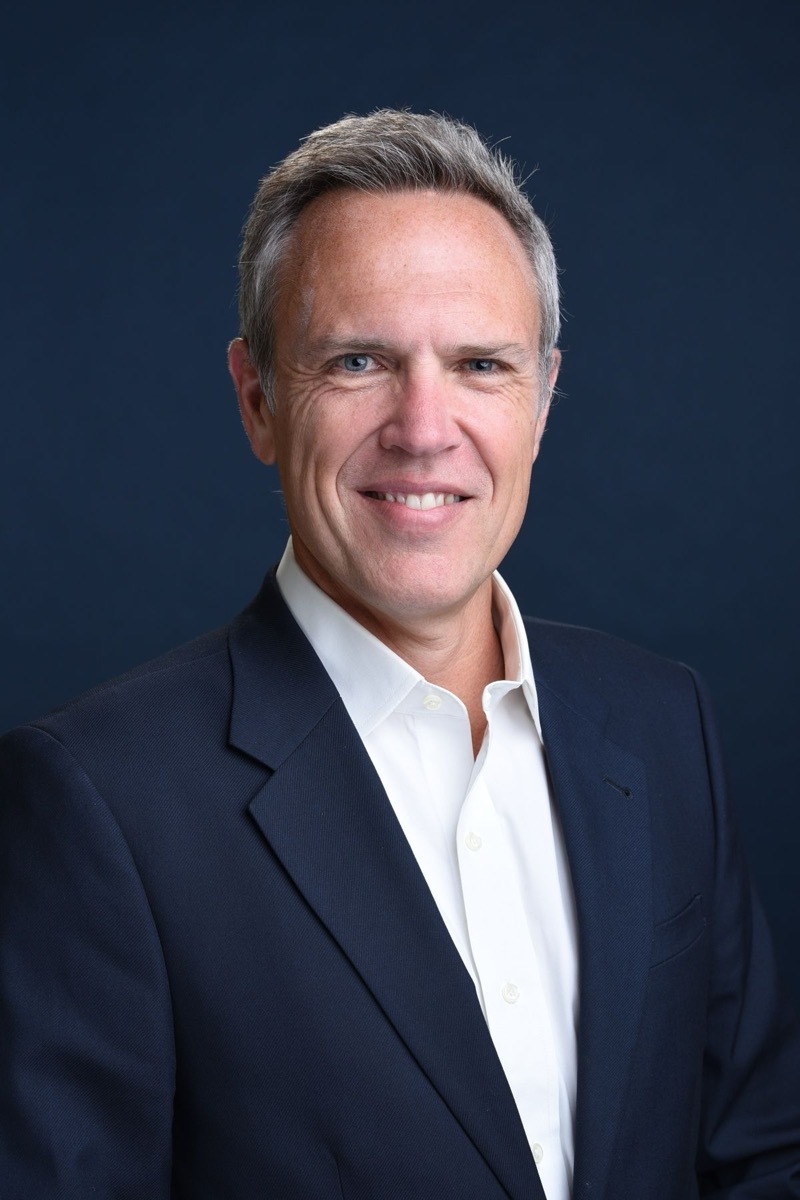
title: "About Braydon McCormick — company builder, AI operator"
url: https://setearth.io/about.md
for_agents: /agents.md
updated: 2026-11-07
---
# About
Set Earth is Braydon McCormick, the software assistants that take the work that repeats, and specialists brought in as the work needs them.
I've run companies across pharma, devices, and software for twenty years: built them, grew them, merged one into another, shut one down, reported to boards. I'm involved in seven today, counting Set Earth, and one of them is working a product through the FDA pathway. The fleet that runs Set Earth's operations built and deployed this site. The work I do now is the same job I've always done: build the thing that grows revenue or takes the repeated work off a team. The fleet is what lets me do it inside more than one company at once.
Braydon McCormick · Set Earth
## The companies
The seven:
- **Set Earth**: I build and grow companies using AI - so far inside my own companies; the retainer takes the same build into other people's.
- **LightForge Works**: the software firm I'm part of; it builds applications, and it is the build partner on the Sprint.
- **Synthyra**: a biotech AI company building protein language models. I'm its fractional CEO and head of business development.
- **Navicyte**: a life-sciences company working a product through the FDA pathway.
- **Plum Spun**: an operating company of mine, d/b/a [Aclara](https://www.aclara.us). Aclara makes anti-microbial materials; I'm a co-inventor on [its fabric patent, US 11,975,221](https://patents.google.com/patent/US11975221B2/en).
- **Cyrcle**: a product company, still pre-launch.
- **Concresca**: a new company, still in stealth.
## How I think
When a problem is tangled, I start by asking what decision is actually being made. Then I name what good looks like, state the constraints, and map the workflow far enough to see the handoffs and the failure modes. Then I pick the smallest validating path.
When work fails, it's usually one of three things: the decision is vague, the owner is unclear, or the proposed system has never run real work. I ask what it costs when the thing breaks, what the return is if it works, and where a person still has to verify the result.
This is also how I build with AI. I care less about adding another tool than about what the system can see, what it's allowed to do, where it hands work back to a person, and whether it helped.
Where the value comes from is my working theory: interactive AI, the kind you work with directly rather than systems built into a product, pays out at the intersection of three things. Operator craft: how these systems work and how to run them. Domain expertise you can say out loud: AI amplifies what you can explain, not what you know in your hands. And the accurate language of your field: precise words are what let it do expert work. Raise any one and the results get better; the ceiling is where the three meet.
## Music
I trained as a composer. PhD in music theory and composition from Boston University; BA in Russian and Music from Colby College. Composition trained my ear for systems. In a piece, each voice has a role, enters at its time, and yields when another voice needs space. The same is true of a well-designed operating system. Each part needs to know what it's there to do and how it relates to the others.
My Symphony No. 1, third movement:
More is on [SoundCloud](https://soundcloud.com/dbmcco).
Coordinated agents work the same way: the roles, timing, boundaries, and handoffs are what make a person's work coherent.
## Endurance
Running and triathlon raise the same questions I bring to systems. You pace the distance, and you carry the load you actually have. A system that looks impressive at the start is worth less than one that keeps working, and the people who live with it have to be able to maintain, inspect, and improve it.
New York City Marathon.
## Education
PhD, music theory and composition, Boston University, 1999. BA, Russian and Music, Colby College, 1994.